Food, Games and Everyday Life in Medieval Kilkenny, Ireland
Imagine waking up in Medieval Kilkenny.
There is no alarm clock, no morning coffee and certainly no quick scroll through your phone before getting out of bed. Instead, the town is already stirring. Fires are being lit, merchants are opening their shops, animals are making themselves heard and the smell of bread, woodsmoke and, perhaps less pleasantly, the medieval streets fills the air.
But what did people actually eat? What did they wear? Where did they live? And did children ever get time to play?
Thanks to archaeology, scientific research and extraordinary surviving records such as the Liber Primus Kilkenniensis, we know more about everyday life in Medieval Kilkenny than you might think.
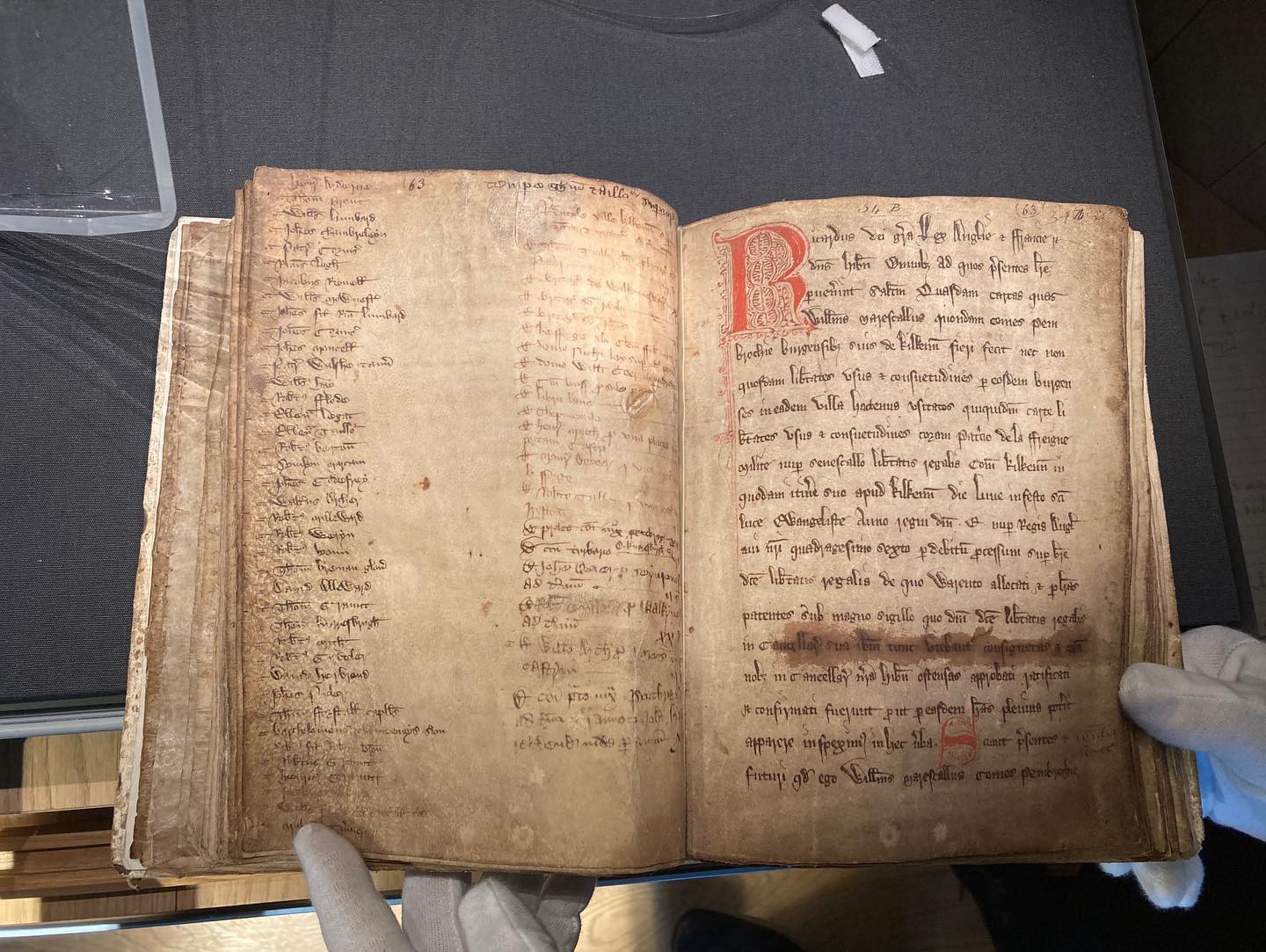 Photo: Liber Primus Kilkenniensis
What Was for Dinner?
If you were wealthy in Medieval Kilkenny, dinner could be surprisingly impressive.
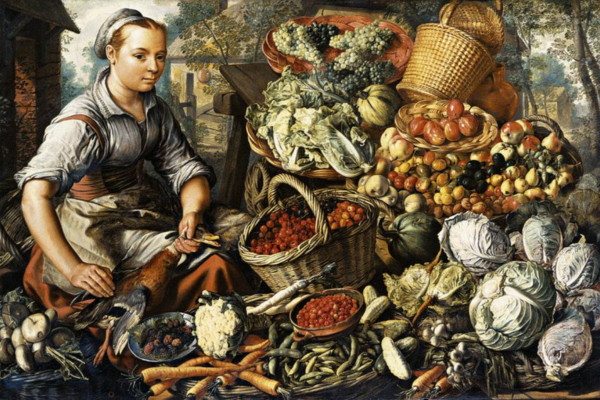
Records in the Liber Primus and other original sources tell us what people bought and ate. Fish, beef and pork appeared on wealthier tables, while everyday diets relied heavily on oats, butter and other dairy products. The Liber Primus even records foods including herrings, salmon, eels, honey, figs and raisins, giving us a glimpse of both local produce and goods arriving through trade.
Research discussed by Dr Robert Power during the FoodCult talk at the Medieval Mile Museum provided an even more personal source of evidence: people’s teeth. Analysis of dental calculus from individuals buried at St Mary’s showed diets rich in fish, oats and dairy, with surprisingly healthy teeth considering the period.
Diet also changed after the Black Death. Before the dramatic population decline, grain formed a much greater part of the diet. Afterwards, with fewer people available to cultivate crops and comparatively more livestock available, meat became more accessible.
Food was about status too. Medieval thinking suggested that your diet should suit your place in society and the work you did. Someone doing heavy manual labour was thought to need heartier, coarser foods, while the wealthy could dine on smaller portions of numerous more refined dishes.
Then there were the four humours. Medieval people believed good health depended on keeping the body’s four humours in balance, and warm, moist foods were considered particularly suitable. Stews, soups and broths were therefore ideal, as well as being practical. Throw whatever was available into a pot, leave it simmering over the fire and get on with your day.
Kilkenny was not cut off from the wider world either. Spices and other foods were arriving through trade from the Mediterranean and beyond.
And table manners?
You ate largely with your hands. Diners might have their own knife for cutting food, but the fork would have to wait. The fork didn’t become widely used across Europe until the 17th century. So yes, Medieval Kilkenny could offer a decent dinner. Just don’t ask where the cutlery drawer is.
Rich Door, Poor Door: A Day in Medieval Kilkenny
Now imagine two doors opening onto a Kilkenny street one morning.
Behind the first lives a wealthy merchant family. Their home might combine business and family life, with a shop facing the street and living accommodation behind or above it. Medieval Kilkenny’s burgage plots could stretch back from the main streets, with space for yards, stores, gardens and outbuildings. Houses were built in both timber and stone.
Their day might involve overseeing business, attending civic affairs, meeting other merchants, arranging trade or managing servants and apprentices.
A poorer labourer’s morning would look very different. Work began early and could involve carrying goods, building, farming, tending animals or working for one of the town’s craftspeople. Accommodation was simpler and life was far more physically demanding.
In other words, there was no universal “medieval lifestyle”. Your experience of Kilkenny depended enormously on the family you were born into. Much like today.
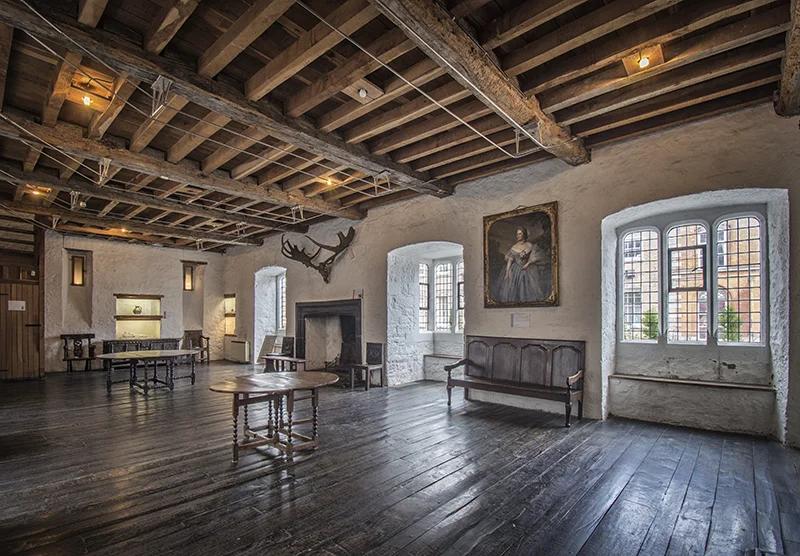 Photo: Rothe House, Kilkenny
So, What Did Everyone Do for a Living?
Medieval Kilkenny was a busy commercial town, and somebody had to keep it running.
Merchants, craftspeople, traders, agricultural workers, and servants worked alongside the clergy and members of wealthy civic families. Medieval Irish towns supported textile production, leatherworking, metalworking and other skilled trades, while the Liber Primus records people being admitted to the freedom of Kilkenny so they could practise their trades.
Bread and ale were important enough that their prices and standards were regulated.
And apparently, so were pigs.
In 1337, the Liber Primus records a rule concerning pigs found wandering in the cemetery of St Mary’s. By 1349, pigs roaming parts of Kilkenny had become enough of a nuisance for further regulations to be introduced.
So if you think modern towns have unusual by-laws, Medieval Kilkenny would like a word.
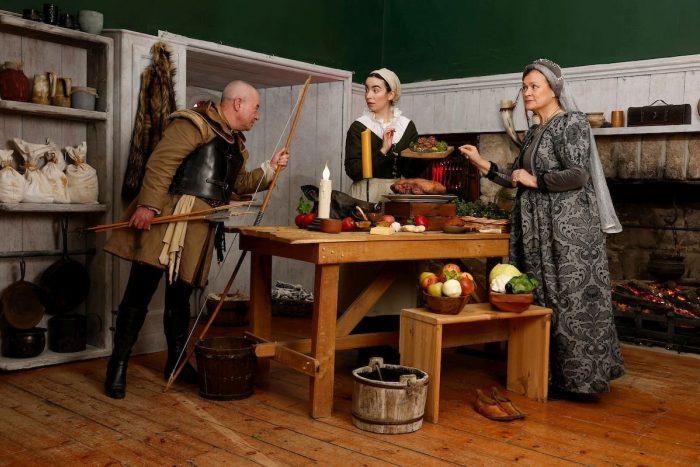 Photo: Dalkey Castle & Heritage Centre
What Did People Wear in Medieval Kilkenny?
Your clothes could tell people a great deal before you ever spoke.
For ordinary people, clothing needed to be practical, durable and suitable for work, with wool and linen among the important materials of the period. Textile production was itself an important medieval craft, with archaeological finds including spindle whorls and loom weights.
For wealthier families, clothing could become another way to demonstrate status. Better-quality fabrics, finer workmanship and fashionable garments immediately signalled that you were not spending your day hauling sacks or working in a muddy yard.
Clothes were valuable possessions. There was no medieval equivalent of ordering three outfits online and sending two back on Monday.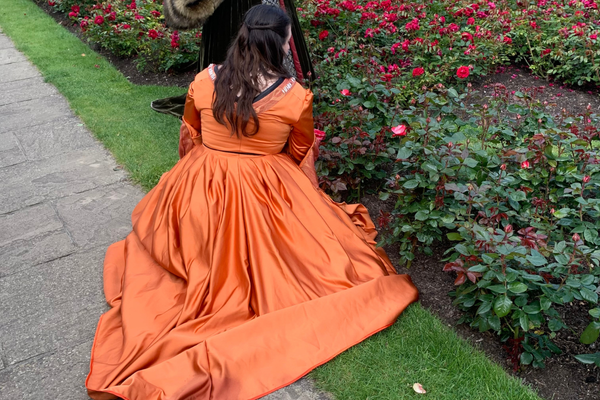
Did Children Actually Have Fun in Medieval Kilkenny?
Thankfully, yes. Children were expected to help their families and learn the skills they would need as adults, but they still found time to play. Evidence from Medieval Ireland tells us that children enjoyed toys like the little soldier displayed in the museum, dolls, marbles, rattles, sticks and spinning tops.
No screens, batteries, or Wi-Fi were required. A spinning top could apparently provide the entertainment, although we suspect a medieval child would have swapped it for a games console fairly quickly if given the choice.
Children also learned by watching and helping adults. Growing up meant becoming useful to the household, whether that involved animals, crafts, household work or eventually learning a trade.
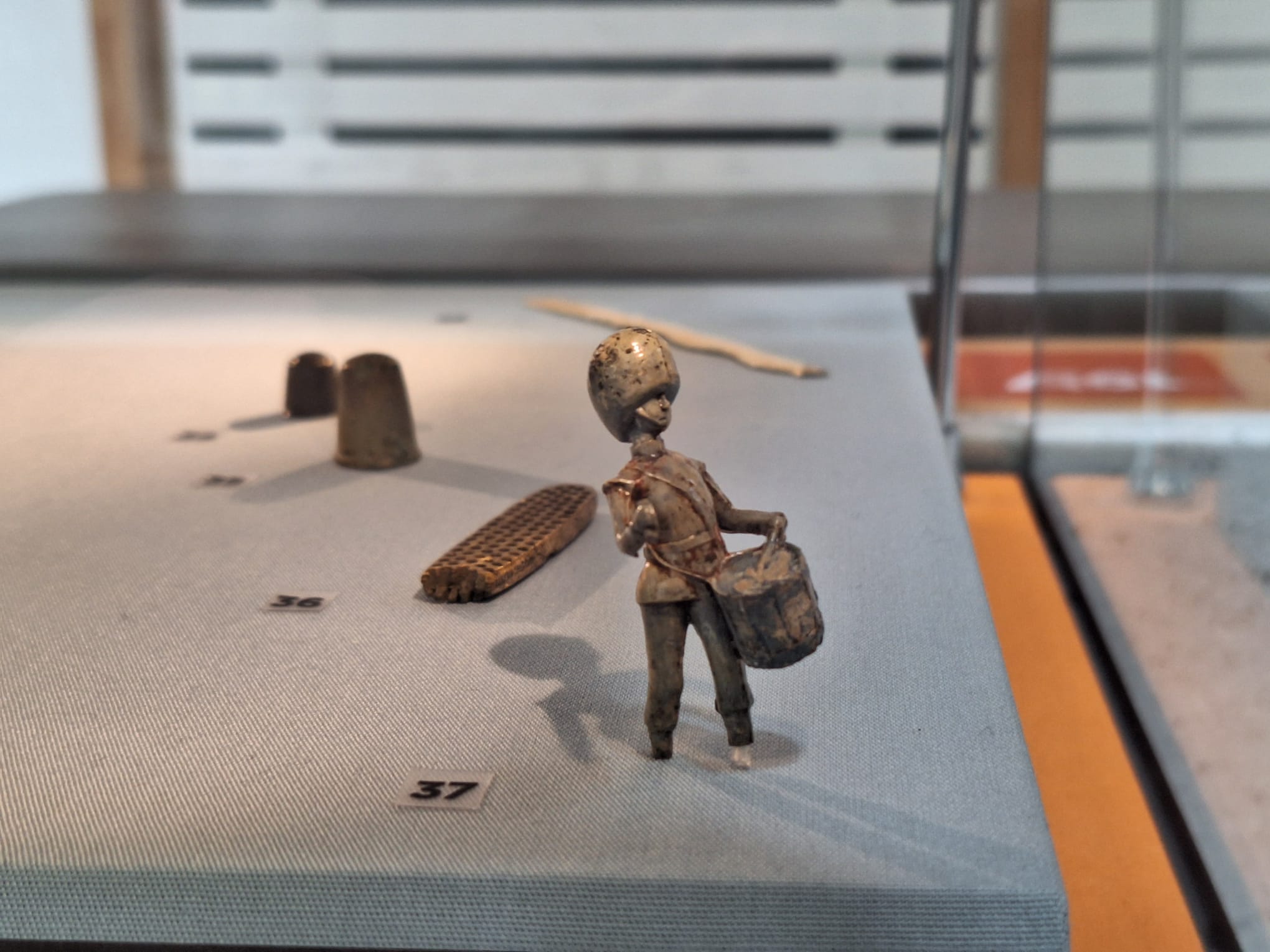 Photo: Toy soldier displayed in the museum
A Few Things That Might Surprise You Today
Medieval Kilkenny was probably more connected and organised than many people imagine. Food and spices travelled considerable distances. Town authorities regulated trade, bread and ale. Wealthy merchants conducted business from houses lining streets we still walk today. Children had toys. People cared about fashion and status. And city officials occasionally had to deal with troublesome livestock wandering where they definitely should not have been.
Most importantly, the people of Medieval Kilkenny were not simply names and dates in a history book. They worked, ate, shopped, argued, raised children, worried about money, dressed to impress, enjoyed good food and dealt with everyday annoyances, much as we do today.
Their world looked very different from ours, but the people themselves may feel surprisingly familiar.
Discover Medieval Kilkenny History for Yourself
At the Medieval Mile Museum, many of those human stories can still be discovered through the artefacts, tombs, manuscripts and archaeological evidence left behind.
The next time you walk through Kilkenny, imagine the streets filled with merchants and craftspeople, children playing, pots simmering over fires and, somewhere in the distance, yet another pig causing trouble.
Come and discover what everyday life was really like in Medieval Kilkenny.
Discover more about Medieval Kilkenny through our
guided tours, immersive exhibits, and special events.
Click here to book your visit today.
For more info
Visit: www.medievalmilemuseum.ie
Call: 056 781 7022 | Email: info@medievalmilemuseum.ie



 Fashion historian