Categories
Blog

What Was Life Really Like in Medieval Kilkenny?

Food, Games and Everyday Life in Medieval Kilkenny, Ireland

Imagine waking up in Medieval Kilkenny.
There is no alarm clock, no morning coffee and certainly no quick scroll through your phone before getting out of bed. Instead, the town is already stirring. Fires are being lit, merchants are opening their shops, animals are making themselves heard and the smell of bread, woodsmoke and, perhaps less pleasantly, the medieval streets fills the air.

But what did people actually eat? What did they wear? Where did they live? And did children ever get time to play?

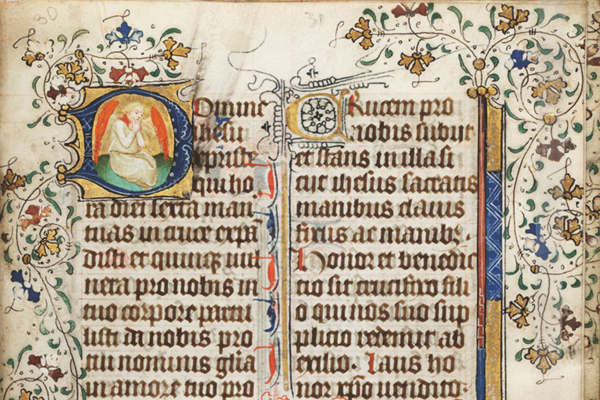
Thanks to archaeology, scientific research and extraordinary surviving records such as the Liber Primus Kilkenniensis, we know more about everyday life in Medieval Kilkenny than you might think.
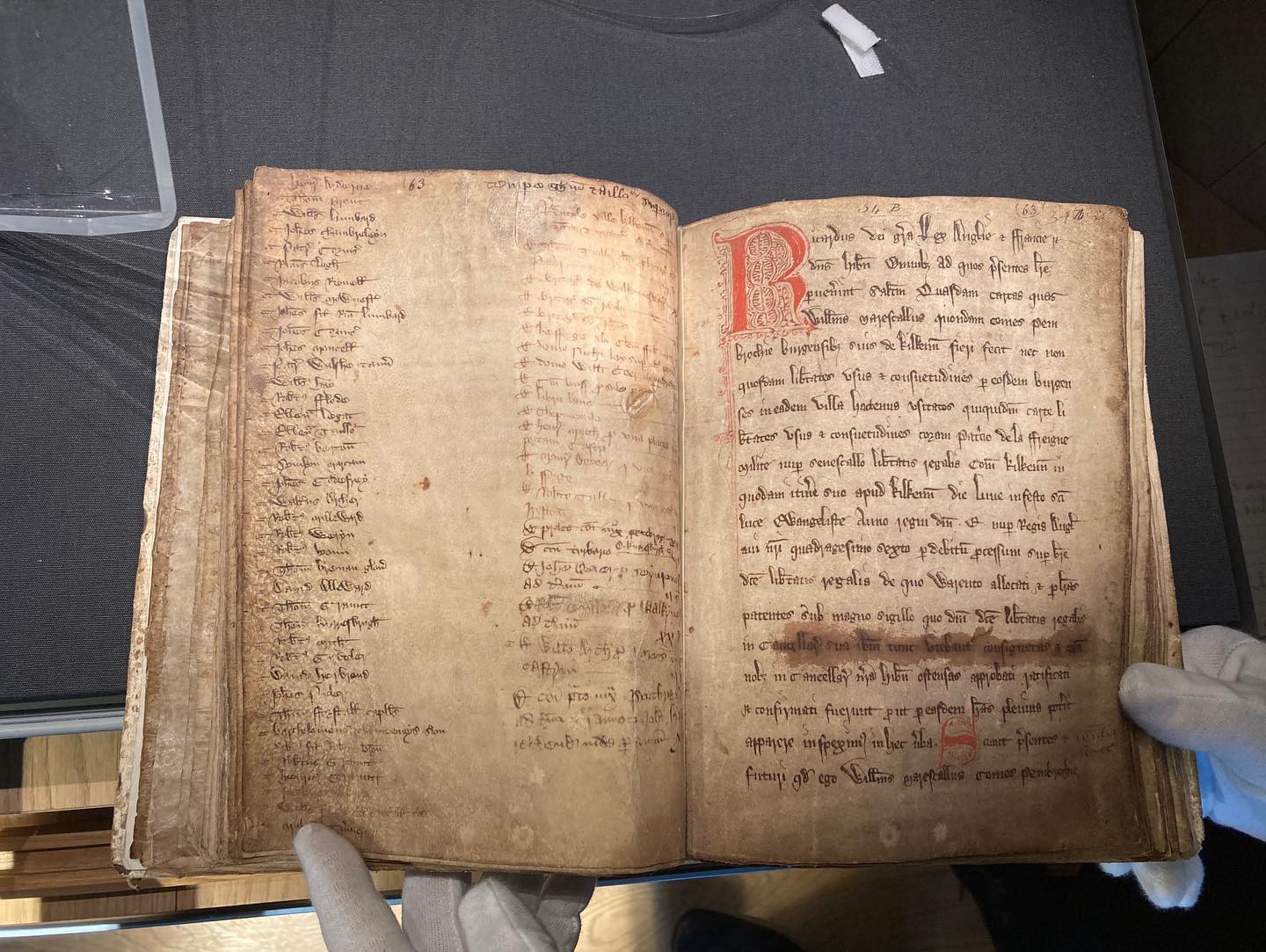
liber primusPhoto: Liber Primus Kilkenniensis

What Was for Dinner?

If you were wealthy in Medieval Kilkenny, dinner could be surprisingly impressive.

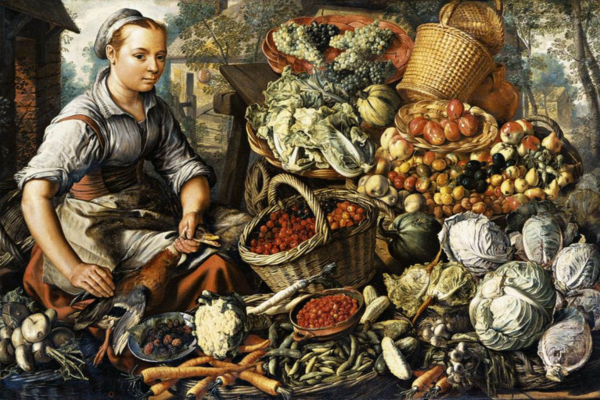
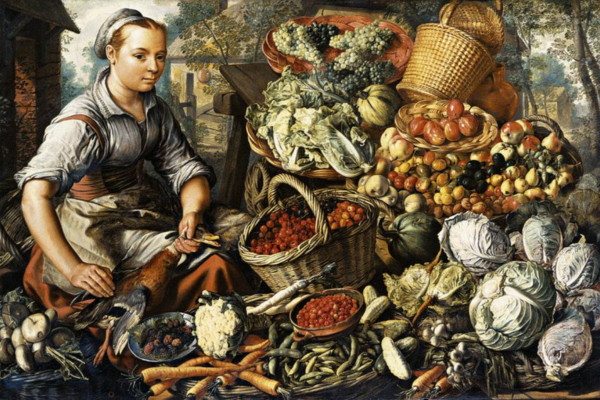
Records in the Liber Primus and other original sources tell us what people bought and ate. Fish, beef and pork appeared on wealthier tables, while everyday diets relied heavily on oats, butter and other dairy products. The Liber Primus even records foods including herrings, salmon, eels, honey, figs and raisins, giving us a glimpse of both local produce and goods arriving through trade.

Research discussed by Dr Robert Power during the FoodCult talk at the Medieval Mile Museum provided an even more personal source of evidence: people’s teeth. Analysis of dental calculus from individuals buried at St Mary’s showed diets rich in fish, oats and dairy, with surprisingly healthy teeth considering the period.

Diet also changed after the Black Death. Before the dramatic population decline, grain formed a much greater part of the diet. Afterwards, with fewer people available to cultivate crops and comparatively more livestock available, meat became more accessible.

Food was about status too. Medieval thinking suggested that your diet should suit your place in society and the work you did. Someone doing heavy manual labour was thought to need heartier, coarser foods, while the wealthy could dine on smaller portions of numerous more refined dishes.

Then there were the four humours. Medieval people believed good health depended on keeping the body’s four humours in balance, and warm, moist foods were considered particularly suitable. Stews, soups and broths were therefore ideal, as well as being practical. Throw whatever was available into a pot, leave it simmering over the fire and get on with your day.

Kilkenny was not cut off from the wider world either. Spices and other foods were arriving through trade from the Mediterranean and beyond.
basket weaving

And table manners?

You ate largely with your hands. Diners might have their own knife for cutting food, but the fork would have to wait. The fork didn’t become widely used across Europe until the 17th century. So yes, Medieval Kilkenny could offer a decent dinner. Just don’t ask where the cutlery drawer is.

Rich Door, Poor Door: A Day in Medieval Kilkenny

Now imagine two doors opening onto a Kilkenny street one morning.

Behind the first lives a wealthy merchant family. Their home might combine business and family life, with a shop facing the street and living accommodation behind or above it. Medieval Kilkenny’s burgage plots could stretch back from the main streets, with space for yards, stores, gardens and outbuildings. Houses were built in both timber and stone.
Their day might involve overseeing business, attending civic affairs, meeting other merchants, arranging trade or managing servants and apprentices.

A poorer labourer’s morning would look very different. Work began early and could involve carrying goods, building, farming, tending animals or working for one of the town’s craftspeople. Accommodation was simpler and life was far more physically demanding.

In other words, there was no universal “medieval lifestyle”. Your experience of Kilkenny depended enormously on the family you were born into. Much like today.
mechant house, kilkennyPhoto: Rothe House, Kilkenny

So, What Did Everyone Do for a Living?

Medieval Kilkenny was a busy commercial town, and somebody had to keep it running.

Merchants, craftspeople, traders, agricultural workers, and servants worked alongside the clergy and members of wealthy civic families. Medieval Irish towns supported textile production, leatherworking, metalworking and other skilled trades, while the Liber Primus records people being admitted to the freedom of Kilkenny so they could practise their trades.

Bread and ale were important enough that their prices and standards were regulated.

And apparently, so were pigs.

In 1337, the Liber Primus records a rule concerning pigs found wandering in the cemetery of St Mary’s. By 1349, pigs roaming parts of Kilkenny had become enough of a nuisance for further regulations to be introduced.
So if you think modern towns have unusual by-laws, Medieval Kilkenny would like a word.
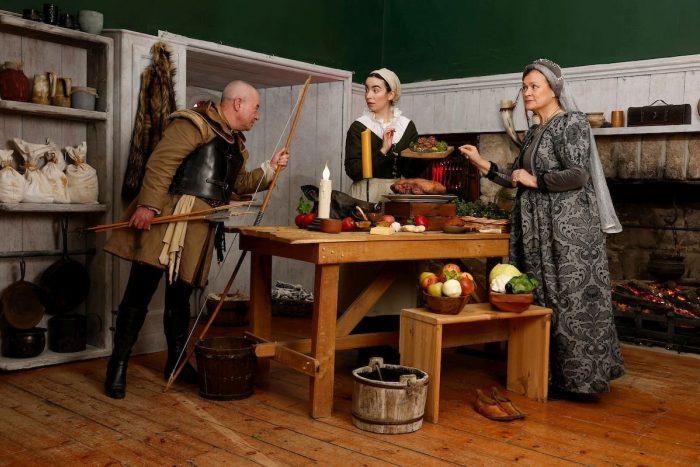
dalkey castle & HeritagePhoto: Dalkey Castle & Heritage Centre

What Did People Wear in Medieval Kilkenny?

Your clothes could tell people a great deal before you ever spoke.

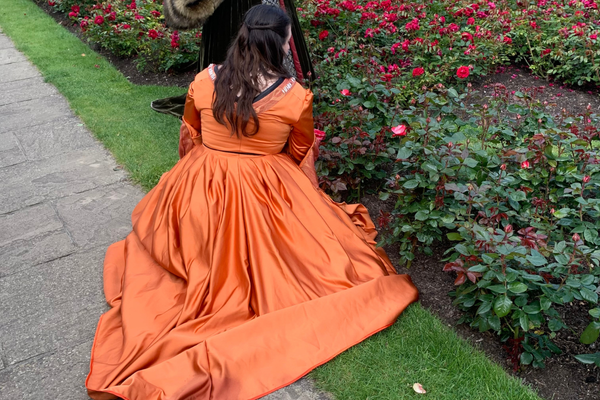
For ordinary people, clothing needed to be practical, durable and suitable for work, with wool and linen among the important materials of the period. Textile production was itself an important medieval craft, with archaeological finds including spindle whorls and loom weights.

For wealthier families, clothing could become another way to demonstrate status. Better-quality fabrics, finer workmanship and fashionable garments immediately signalled that you were not spending your day hauling sacks or working in a muddy yard.

Clothes were valuable possessions. There was no medieval equivalent of ordering three outfits online and sending two back on Monday.Medieval costume mmm
Did Children Actually Have Fun in Medieval Kilkenny?

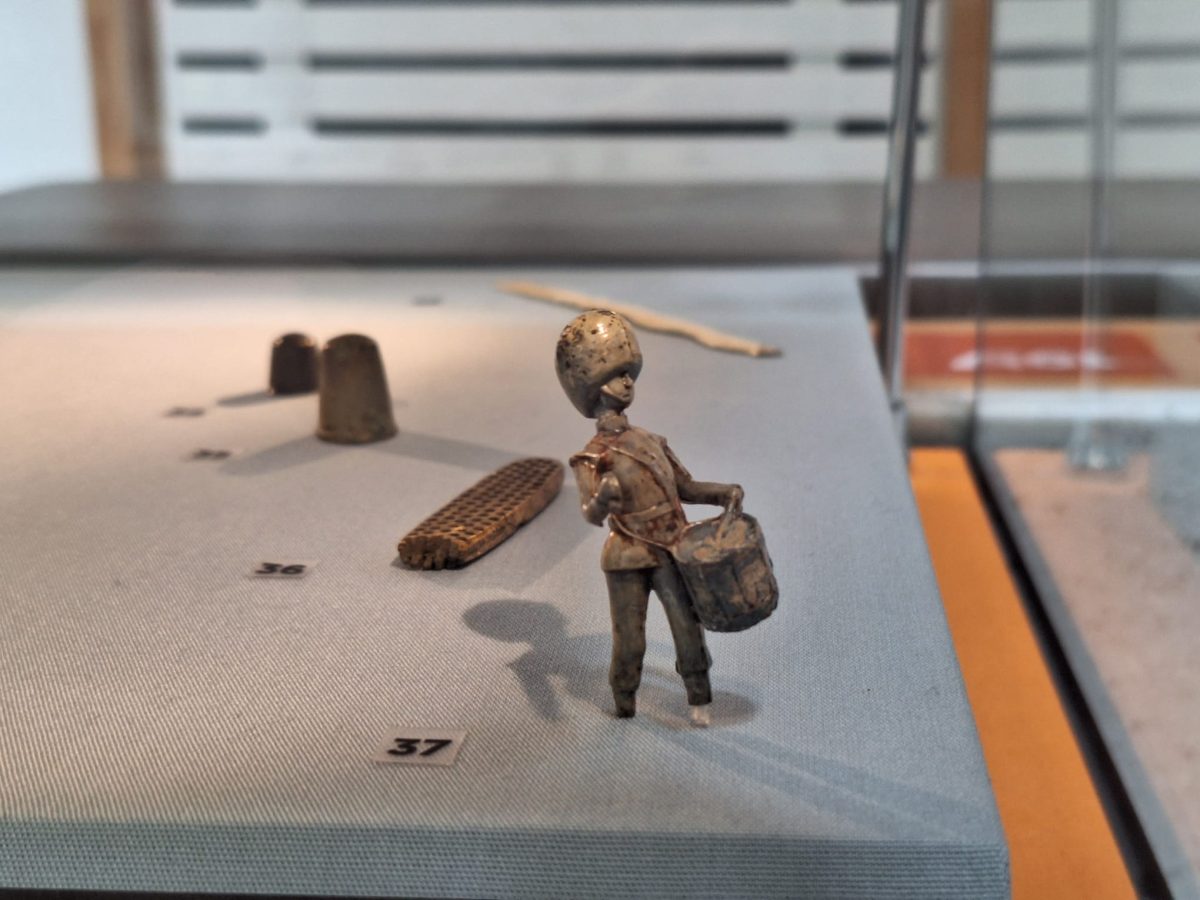
Thankfully, yes. Children were expected to help their families and learn the skills they would need as adults, but they still found time to play. Evidence from Medieval Ireland tells us that children enjoyed toys like the little soldier displayed in the museum, dolls, marbles, rattles, sticks and spinning tops.

No screens, batteries, or Wi-Fi were required. A spinning top could apparently provide the entertainment, although we suspect a medieval child would have swapped it for a games console fairly quickly if given the choice.

Children also learned by watching and helping adults. Growing up meant becoming useful to the household, whether that involved animals, crafts, household work or eventually learning a trade.
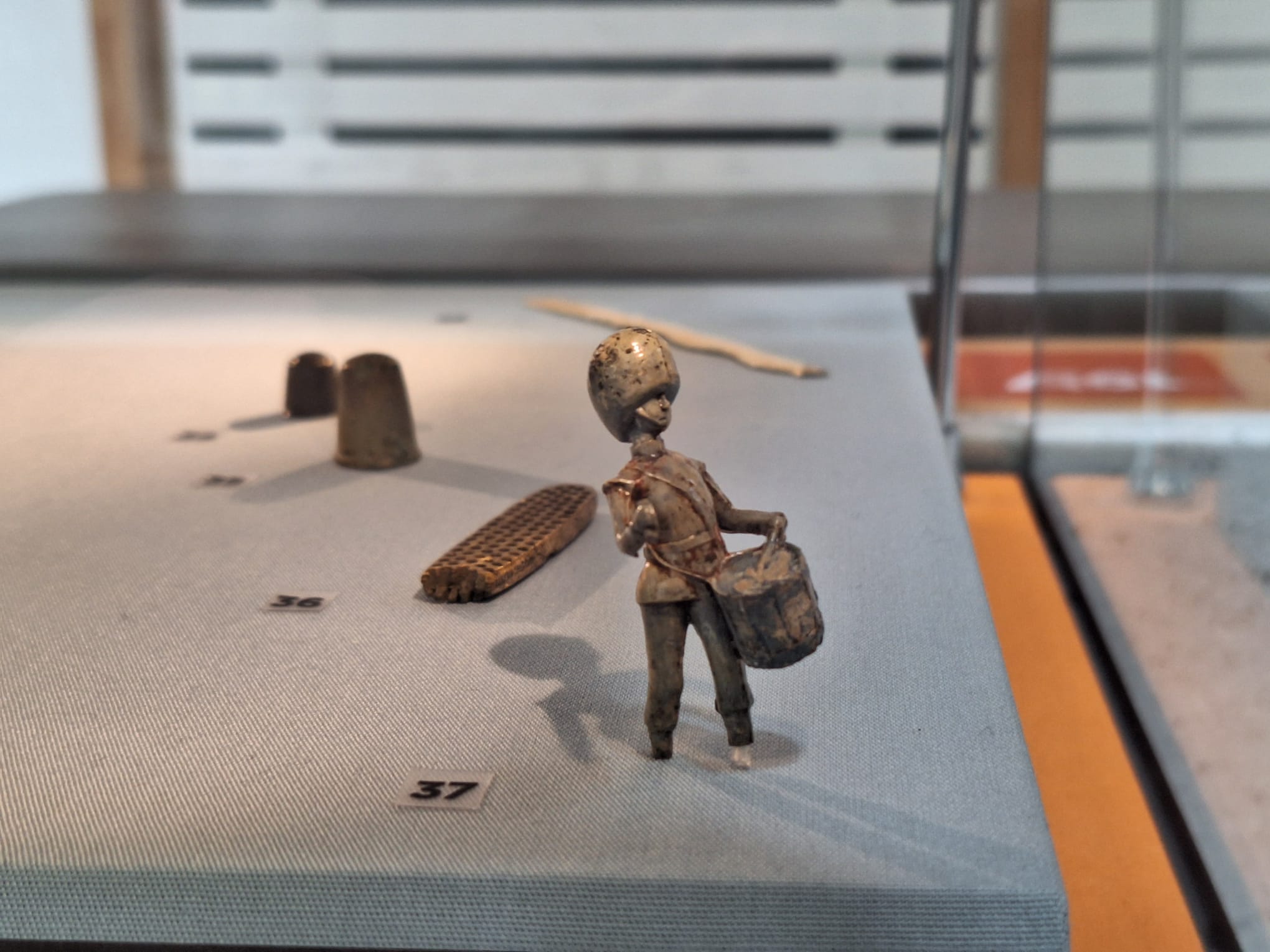
Photo: Toy soldier displayed in the museum

A Few Things That Might Surprise You Today

Medieval Kilkenny was probably more connected and organised than many people imagine. Food and spices travelled considerable distances. Town authorities regulated trade, bread and ale. Wealthy merchants conducted business from houses lining streets we still walk today. Children had toys. People cared about fashion and status. And city officials occasionally had to deal with troublesome livestock wandering where they definitely should not have been.

Most importantly, the people of Medieval Kilkenny were not simply names and dates in a history book. They worked, ate, shopped, argued, raised children, worried about money, dressed to impress, enjoyed good food and dealt with everyday annoyances, much as we do today.

Their world looked very different from ours, but the people themselves may feel surprisingly familiar.

Discover Medieval Kilkenny History for Yourself

At the Medieval Mile Museum, many of those human stories can still be discovered through the artefacts, tombs, manuscripts and archaeological evidence left behind.

The next time you walk through Kilkenny, imagine the streets filled with merchants and craftspeople, children playing, pots simmering over fires and, somewhere in the distance, yet another pig causing trouble.

Come and discover what everyday life was really like in Medieval Kilkenny.


Discover more about Medieval Kilkenny through our
guided toursimmersive exhibitsand special events.

Click here to book your visit today.

For more info
Visit: www.medievalmilemuseum.ie
Call: 056 781 7022 | Email: info@medievalmilemuseum.ie
Categories
Blog

Five Medieval Objects That Reveal Extraordinary Stories from Kilkenny’s Past

What can a toy soldier, a pilgrim’s shell or a centuries-old letter tell us about life in medieval Ireland?

At the Medieval Mile Museum in Kilkenny, every object has a story to tell. More than just archaeological artefacts, these remarkable discoveries reveal the lives, beliefs, ambitions and everyday experiences of the people who once called medieval Kilkenny home.

Here are five fascinating medieval objects that bring history to life.

1 – The Little Lead Soldier: A Glimpse into Medieval Childhood

It’s easy to imagine children in the Middle Ages living very different lives from those of children today. Yet this small lead soldier reminds us that some things never change.

This simple toy would once have belonged to a child, offering entertainment while also reflecting the military world that surrounded medieval society. It provides a rare insight into childhood, play and even the clothing and armour worn hundreds of years ago.


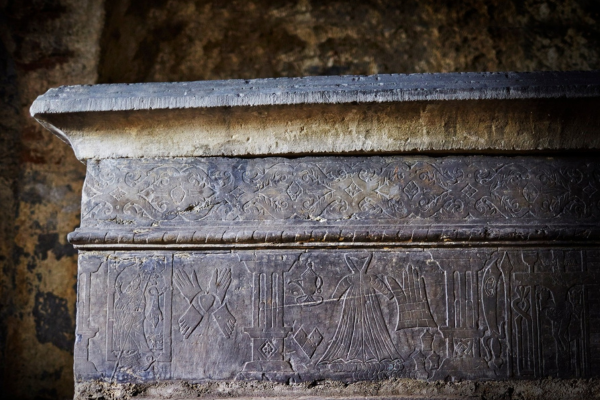
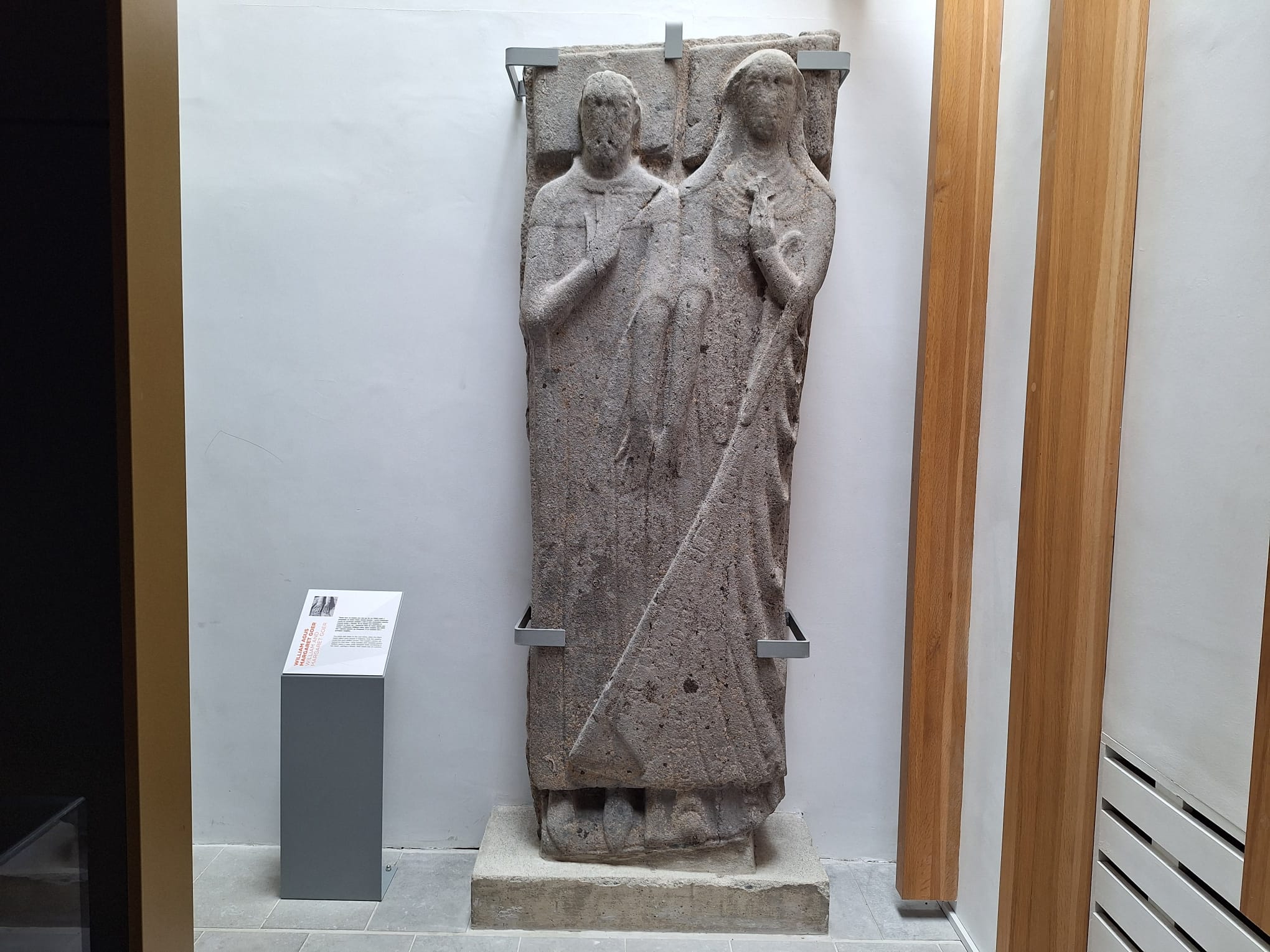
2 – William and Margaret Goer’s Tombstone: A Story of Mystery

Some artefacts answer questions, while others create new ones.

The tombstone of William and Margaret Goer is filled with intriguing clues. Although we know they were wealthy enough to commission an elaborate memorial, unfinished details suggest their monument may have been completed in haste.

Could plague or sudden illness have interrupted the work? While historians cannot say for certain, the evidence offers a fascinating glimpse into life and death in medieval Kilkenny.

The intricate carvings also reveal details about fashion, wealth, and social status, with Margaret’s beautifully depicted gown reflecting the family’s prosperity.


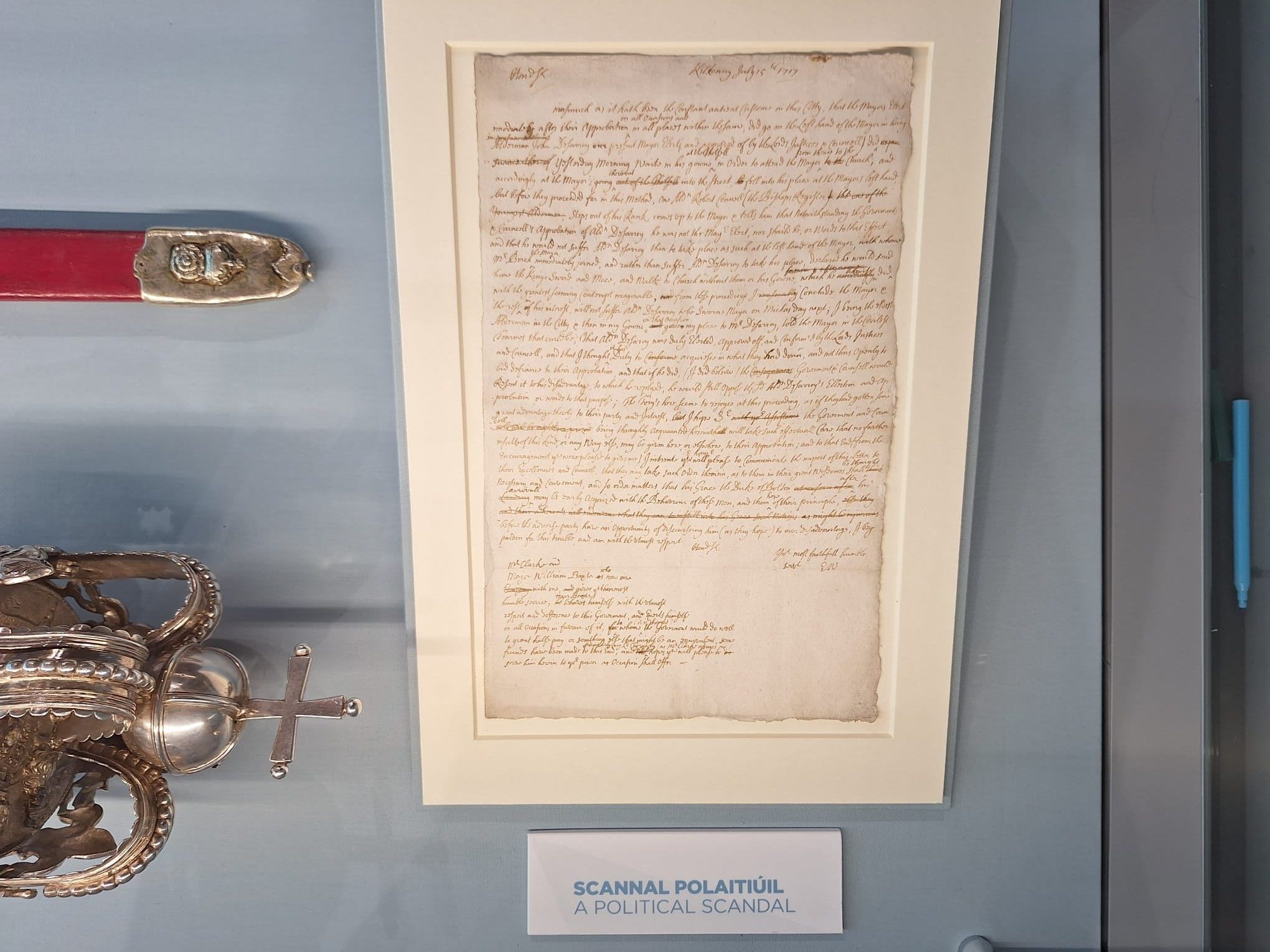
3 – A Political Scandal Preserved in a Letter

Long before newspapers and social media, political scandals could still change lives.

One remarkable letter preserved at the Medieval Mile Museum records a political controversy that threatened some of Kilkenny’s most influential citizens. It captures a specific moment in history, reminding us that power, reputation and public opinion have always mattered.

For historians, documents like this are invaluable windows into medieval politics and daily life.

political scandal


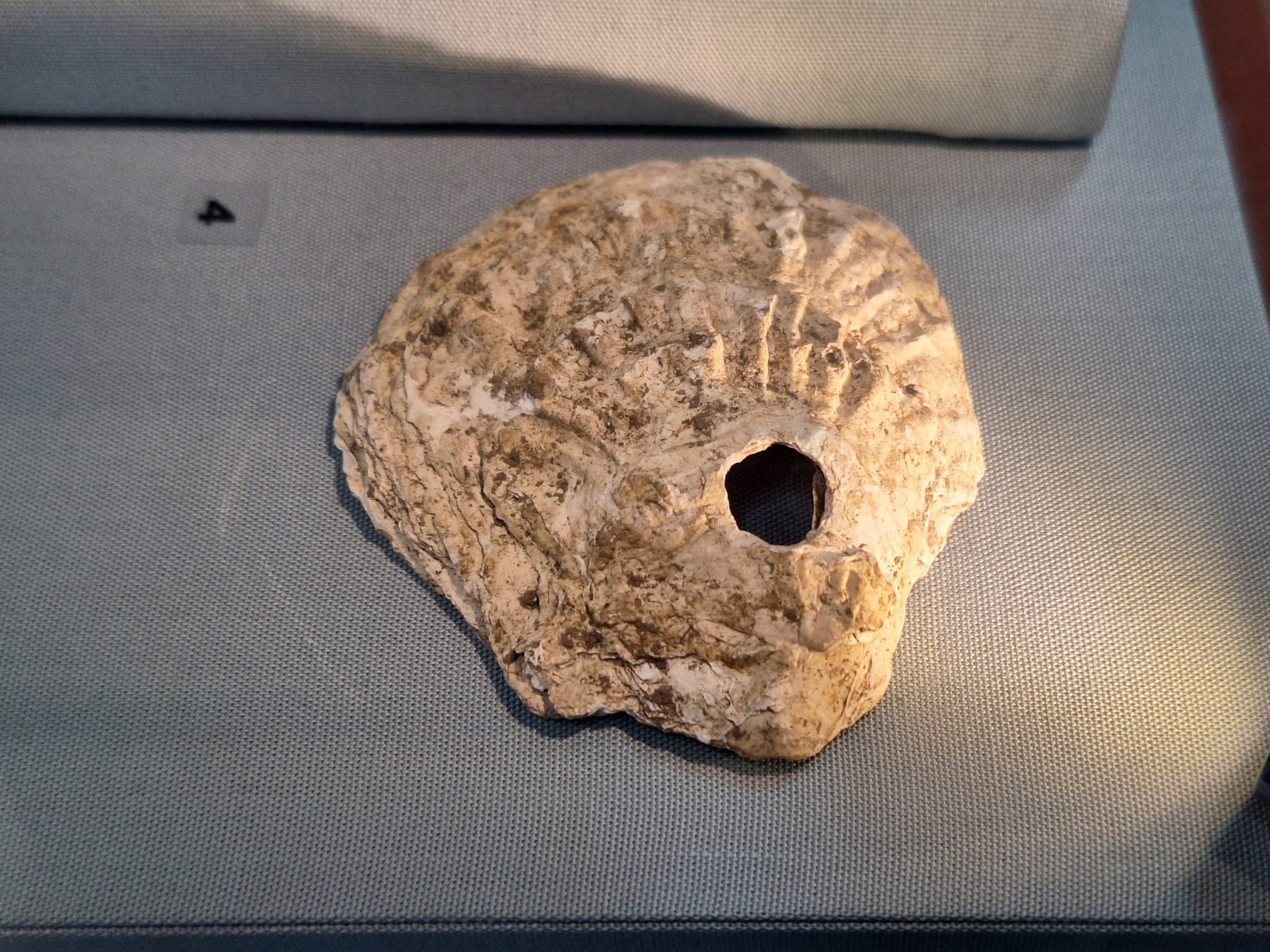
4 – The Pilgrim’s Shell: Faith and the Journey to Santiago

One small shell tells the story of an extraordinary journey. Pilgrim shells were symbols of those who travelled to Santiago de Compostela, one of medieval Europe’s most important pilgrimage destinations. Completing such a journey required significant time, money and dedication.

For many medieval Christians, pilgrimage was believed to strengthen faith and reduce time spent in Purgatory. This modest object represents devotion, hope and the spiritual journeys undertaken by people centuries ago.


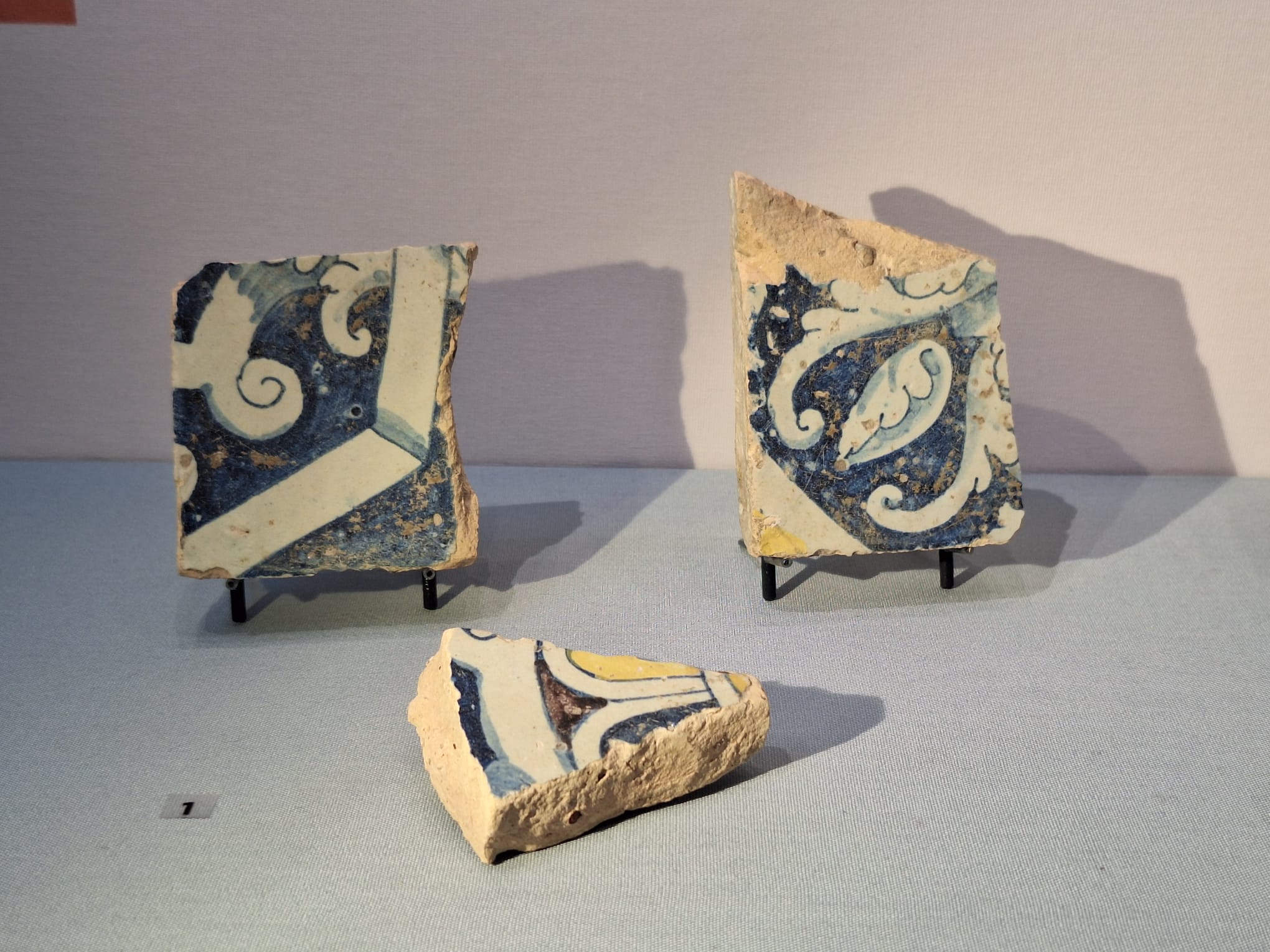
5 – Portuguese Azulejo Tiles: Evidence of Medieval Trade

Not every story begins in Kilkenny. Beautiful Portuguese azulejo tiles found within St Mary’s Church demonstrate the city’s connections with Europe. Imported luxury goods like these reflected both wealth and international trade, showing that medieval Kilkenny was far more connected to the wider world than many people imagine.

These colourful tiles remind us that merchants, ideas and craftsmanship travelled across Europe long before modern transport.

azulis tiles


Discover the Stories Behind the Objects

Every artefact at the Medieval Mile Museum tells a human story. Together, they reveal how people lived, worked, travelled, worshipped and celebrated in medieval Kilkenny.

Whether you’re interested in archaeology, Irish history, medieval life or unique things to do in Kilkenny, the Medieval Mile Museum offers an unforgettable journey through centuries of remarkable stories waiting to be discovered.

Plan your visit today and uncover the people behind the objects that shaped Kilkenny’s past.


Discover more about Medieval Kilkenny through our
guided toursimmersive exhibitsand special events.

Click here to book your visit today.

For more info
Visit: www.medievalmilemuseum.ie
Call: 056 781 7022 | Email: info@medievalmilemuseum.ie
Categories
Blog What's On

Celebrate Heritage Week 2026 at the Medieval Mile Museum

Discover medieval history, traditional crafts, expert talks and family adventures during Heritage Week in Kilkenny.

This year’s Heritage Week theme, Heritage at Risk, highlights the importance of protecting our historic buildings, traditional crafts and cultural knowledge so they can be enjoyed by future generations. From 15 to 23 August 2026, the Medieval Mile Museum will host a week-long programme of events celebrating the stories, skills and traditions that have shaped Ireland for centuries.

Throughout the week, visitors can experience inspiring talks, hands-on workshops, exhibitions and family activities that showcase Kilkenny’s rich medieval heritage in engaging and meaningful ways.

Whether you’re passionate about history, fascinated by archaeology, interested in traditional crafts or simply looking for something different to do in Kilkenny this summer, there’s something for everyone.


Explore Kilkenny’s Medieval Heritage in its European Context

Begin Heritage Week with an unforgettable day alongside one of Ireland’s leading medieval historians.

Professor Tadhg O’Keeffe, Professor of Medieval Archaeology and Architectural History at UCD, will lead two unique events exploring Kilkenny’s Medieval Heritage in its European Context.

Start the day with a guided walking tour through Kilkenny’s medieval streets, including visits to St Canice’s Cathedral and Round Tower, before returning to the Medieval Mile Museum that evening for an illustrated lecture exploring how Kilkenny’s remarkable buildings and archaeology fit into the wider story of medieval Europe.

Attend both events for the complete experience, or enjoy either one independently.


Kilkenny’s Medieval Heritage in its European Context

  • Date: Saturday, 15 August
  • 11:30 am – Guided Walking Tour with Professor Tadhg O’Keeffe, including St Canice’s Cathedral and Round Tower. (Only 20 places available) SOLD OUT
  • 6 pm – Illustrated Lecture: Medieval Kilkenny and its Relationship with Europe.
  • Price: Free (advance booking required)

Book Your Ticket Here

Funded as part of the Culture Programme for Ireland’s Presidency of the Council of the European Union 2026.

Heritage Scavenger Hunt

Looking for something the whole family can enjoy? Sir Richard, the museum’s mischievous cat, has hidden the museum’s special LEGO display pieces, and he needs your help to find them.

As you solve clues throughout the museum, you’ll also discover fascinating stories about heritage crafts and traditions that are at risk of disappearing. It’s a fun way for children and adults alike to explore the museum while learning something new along the way.

  • Search for Sir Richard’s missing LEGO pieces.
  • Discover heritage crafts and traditions at risk.
  • Available throughout museum opening hours.
  • Included with normal museum admission.

Heritage Scavenger Hunt

Date: 15th – 23 August
Time: Throughout museum opening hours
Price: Included with normal museum admission

Book your ticket here!


Discover the Beauty of Mountmellick Lace

One of Ireland’s most distinctive embroidery traditions comes to the Medieval Mile Museum during Heritage Week.

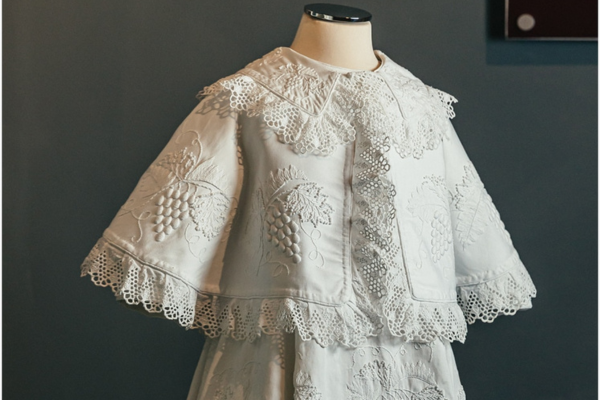
This special exhibition showcases beautiful examples of Mountmellick Lace, alongside contemporary recreations produced by the Kilkenny Mountmellick Embroidery Group dedicated to preserving this uniquely Irish craft.

Throughout the week, visitors can watch live demonstrations, meet skilled makers and learn about the techniques that continue to keep this heritage alive.

Mountmellick Lace Exhibition

  • Original Mountmellick Lace on display.
  • Contemporary recreations by a local community group.
  • Live demonstrations on 20th August from 11am to 1pm.

Included with museum admission.

Mountmellick Lace

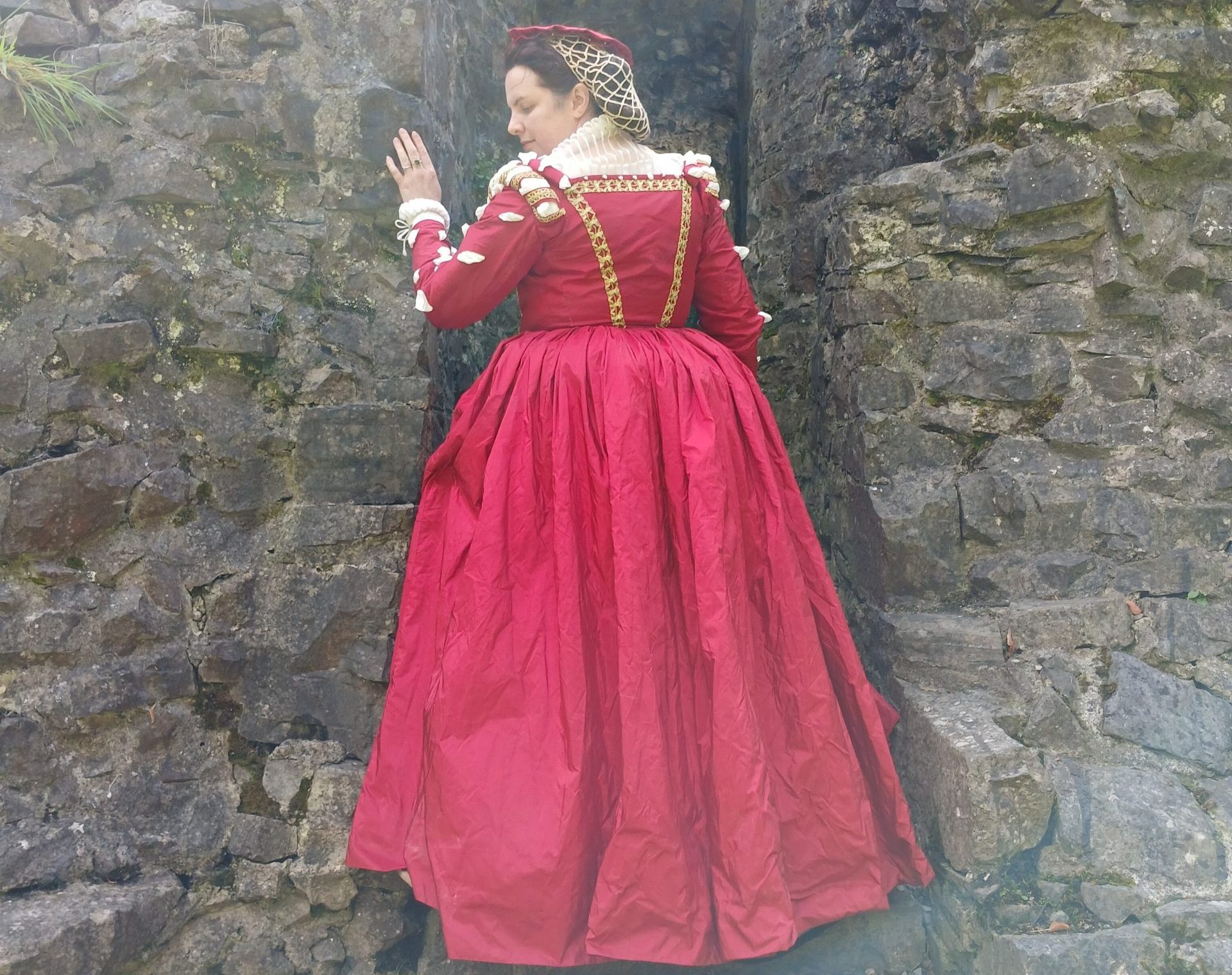
What Did People Really Wear in Tudor Ireland?

Clothing tells remarkable stories about identity, status and everyday life.

Join dress historian Dr Melissa Shiels for an engaging evening exploring the fashions of sixteenth-century Ireland. Through beautifully recreated garments, discover the striking differences between English and Gaelic dress, while learning how clothing reflected wealth, politics and changing society.

“Clean English Appareill” – English and Gaelic Clothing in 16th-Century Ireland

Date: Thursday 20 August
Time:
6 pm
Price: €5 per person | Children under 12 go free.

Book your ticket here

Funded as part of the After Hours at the Museum Scheme by the Department of Culture, Communications and Sport.

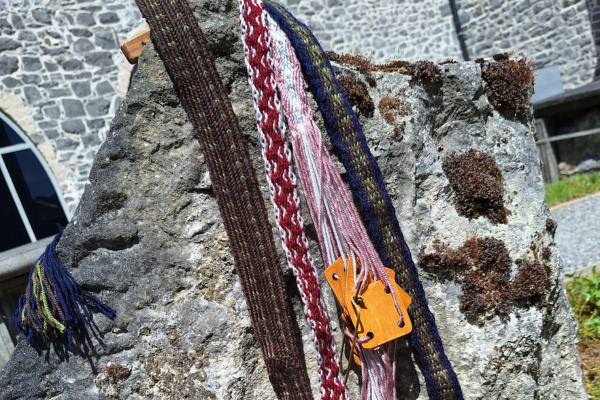
Learn the Ancient Art of Tablet Weaving

Heritage isn’t only about preserving the past. It’s also about keeping traditional skills alive.

As part of the museum’s popular Six After 6 Summer Cultural Series, visitors can learn the ancient craft of tablet weaving, one of Europe’s oldest textile techniques.

During this hands-on workshop, you’ll discover how beautifully patterned bands were created centuries ago while making your own woven piece to take home.

Tablet Weaving Workshop

Date: Friday 21 August
Time: 6 pm
SOLD OUT

tablet weaving


Experience Heritage Week in Kilkenny

From fascinating walking tours and expert talks to family adventures, traditional crafts and hands-on workshops, the Medieval Mile Museum offers one of the most varied Heritage Week programmes in Ireland.

Celebrate Heritage Week 2026 by discovering the people, places and traditions that have shaped Kilkenny for centuries, while helping to shine a light on the heritage that deserves to be protected for generations to come.

View the full programme and book your place on the Medieval Mile Museum website.


Discover more about Medieval Kilkenny through our
guided toursimmersive exhibitsand special events.

Click here to book your visit today.

For more info
Visit: www.medievalmilemuseum.ie
Call: 056 781 7022 | Email: info@medievalmilemuseum.ie
 

Categories
Blog

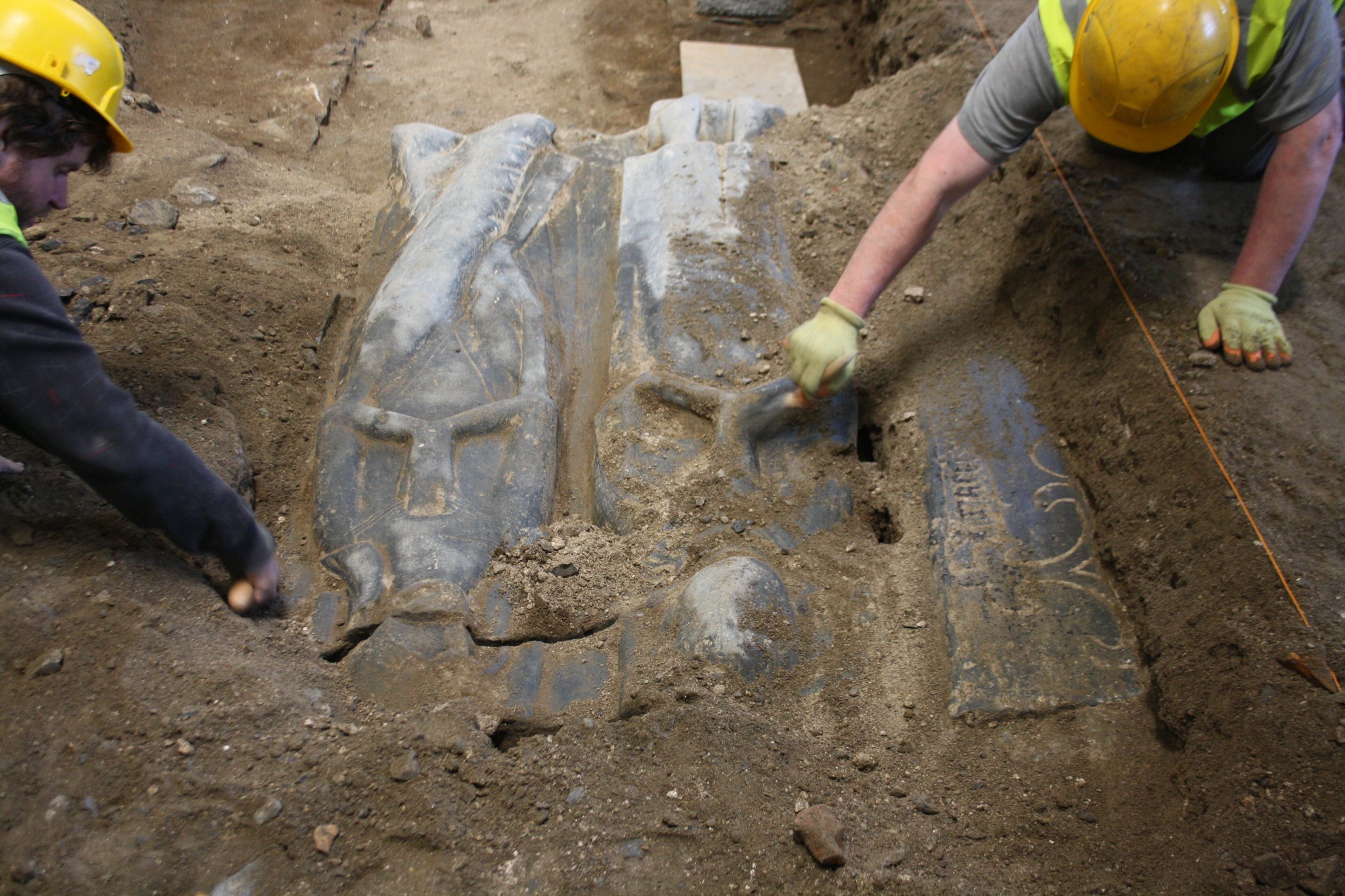
Who Is Buried at St Mary’s Church, Kilkenny?

Discover the Merchants, Bishops and Families Beneath the Medieval Mile Museum

When you step inside the Medieval Mile Museum, you’re not just visiting one of Kilkenny’s top attractions, you’re walking above centuries of history.

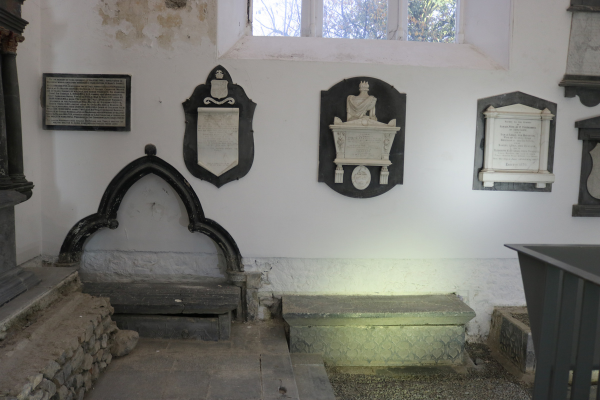
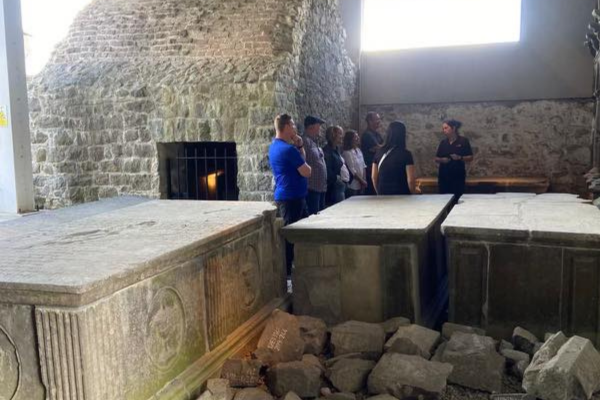
Hidden beneath the floor of the former St Mary’s Church lie the final resting places of some of Kilkenny’s most influential merchants, bishops and families. Their stories reveal how wealth, faith and status shaped medieval life and death in Ireland.


Who is buried beneath St Mary’s Church?

For centuries, St Mary’s Church was one of the most important places of worship in medieval Kilkenny. It also became the burial place for many of the city’s most prominent families.

Among those buried here are members of the Archer, Shee, Rothe, Butler, Knaresborough, Bryan, Archdekin, Ragget, Langton, Cowley, Lee and Lawless families. Many of Kilkenny’s famous “Ten Civic Families” have relatives buried within the church, reflecting their importance in the city’s political, commercial and religious life.

Today, visitors to the Medieval Mile Museum can discover beautifully carved tombs, historic memorials and remarkable stories that connect modern Kilkenny with its medieval past.

Why were people buried inside churches?

During the Middle Ages, burial inside a church was considered a great privilege. People believed that being buried within the church, surrounded by prayers and religious services, could shorten the time their soul spent in Purgatory. Wealthy families often paid for prayers to be said after their death, believing these prayers would help them reach Heaven more quickly.

This belief made burial inside St Mary’s Church one of the highest honours available in medieval Kilkenny.

st marys, kilkenny

Rich and poor: What did medieval burials look like?

Burial customs often reflected a person’s wealth and social standing. Members of Kilkenny’s wealthy merchant families were frequently buried in fine clothing and sometimes with personal possessions such as crosses, jewellery or other treasured items. Some were laid to rest in elaborate tombs or even lead coffins.

For poorer members of society, burials were much simpler. Many were wrapped in linen shrouds rather than placed in coffins, leaving behind only small traces such as copper pins discovered by archaeologists.

These discoveries provide fascinating insights into everyday life in medieval Ireland and help historians understand how people lived and died hundreds of years ago.

st marys graveyard

The hidden meanings carved into medieval tombs

The tombs inside St Mary’s Church tell stories through their carvings as well as their inscriptions. Many feature traditional Christian symbols, while others reveal how medieval Europeans viewed the world around them. One remarkable example is found on the Bryan family tombs, where different styles of swords reflect changing historical events and beliefs across the centuries.

Every carving offers another clue to the lives, faith and ambitions of the people buried beneath the church floor.

lawless tomb

Discover Kilkenny’s hidden history

The Medieval Mile Museum offers visitors a unique opportunity to explore one of Ireland’s most significant medieval churches while uncovering the stories of the people who shaped Kilkenny’s history.

Whether you’re fascinated by medieval Ireland, genealogy, archaeology or local history, a visit to the Medieval Mile Museum reveals centuries of remarkable stories waiting beneath your feet.

Book your ticket here

Plan your visit today and experience one of Kilkenny’s most fascinating historical attractions.

Discover more about Medieval Kilkenny through our
guided toursimmersive exhibitsand special events.

Click here to book your visit today.

For more info
Visit: www.medievalmilemuseum.ie
Call: 056 781 7022 | Email: info@medievalmilemuseum.ie
Categories
Blog What's On

A Unique Wellness Experience in Kilkenny

Yoga, Breathwork & Sound Baths in Kilkenny

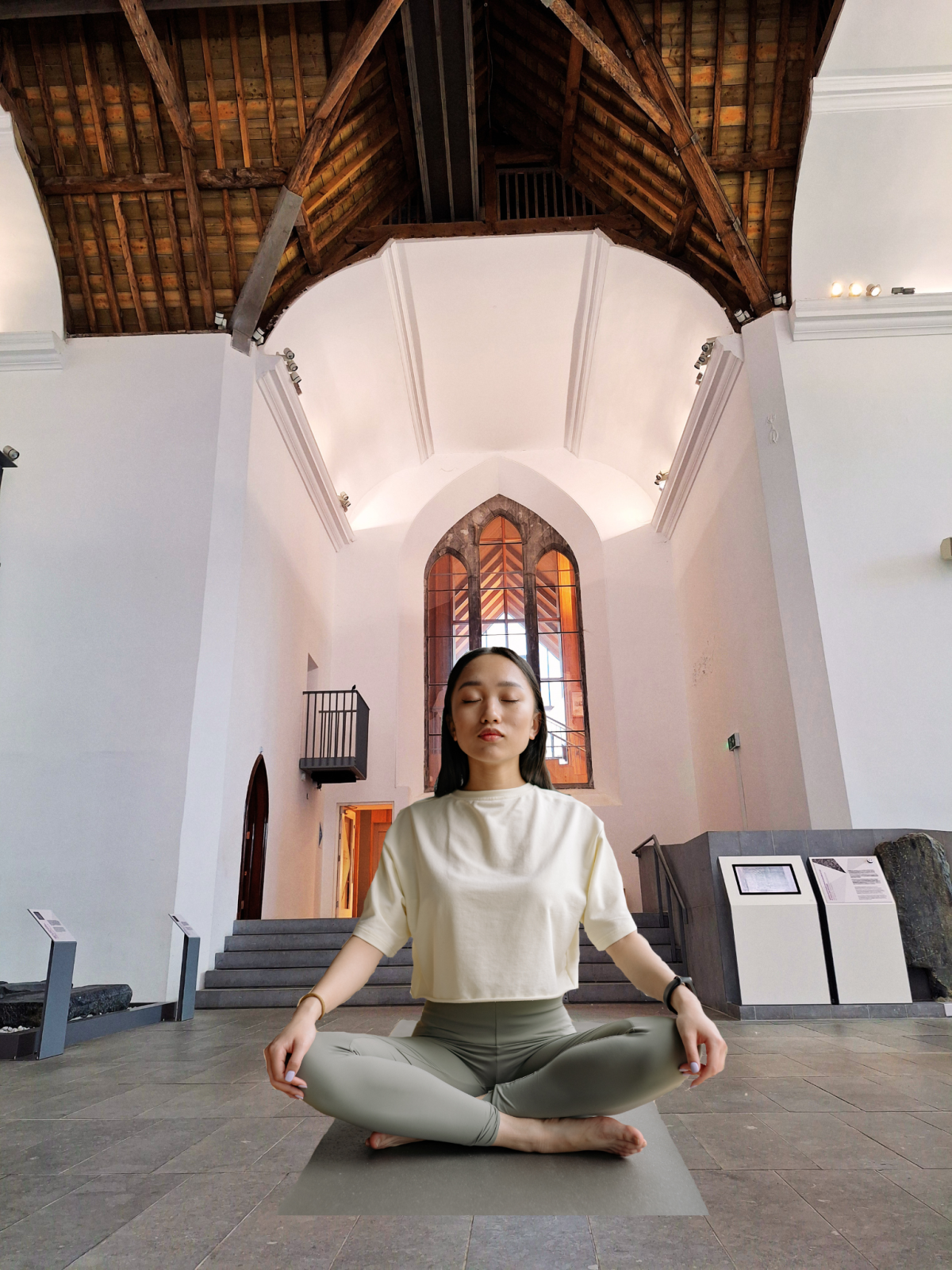
If you’re looking for wellness events in Kilkenny, an opportunity to unwind after a busy day or simply a peaceful evening dedicated to your wellbeing, the Medieval Mile Museum is introducing a brand-new series of Holistic Wellness Evenings this summer.

Taking place within the beautiful surroundings of the former St Mary’s Church, these unique evening experiences combine mindfulness, movement and relaxation in one of Kilkenny’s most inspiring historic spaces.

A Unique Setting for Wellness

For centuries, St Mary’s Church has been a place where people gathered for reflection and community. Today, as home to the Medieval Mile Museum, it continues to provide a peaceful and welcoming environment, making it the perfect setting for a series of restorative wellness experiences.

Whether you choose a calming Sound Bath or a gentle Yoga & Breathwork session, each evening offers the opportunity to slow down, relax and reconnect.

Event Programme

Monday 13th July – Breathwork & Sound Bath
Experience guided breathwork with Gráinne and Simon of Expand Wellness, followed by a deeply relaxing sound bath led by Laura of Cullen Alternative Therapies.


Monday 27th July – Yoga & Breathwork
Join Katie of Cúram le Cáit together with Gráinne and Simon of Expand Wellness for an evening combining mindful movement with guided breathing techniques.


Monday 24th August – Breathwork & Sound Bath
Enjoy another opportunity to experience the calming combination of breathwork and therapeutic sound led by Gráinne and Simon of Expand Wellness, followed by a deeply relaxing sound bath led by Laura of Cullen Alternative Therapies.


Monday 7 September – Yoga & Breathwork
Finish the summer with an evening dedicated to movement, mindfulness and relaxation, with mindful movement and guided breathing techniques with Katie of Cúram le Cáit, together with Gráinne and Simon of Expand Wellness.


Event Details

Dates: 13 July, 27 July, 24 August & 7 September 2026
Time: 6 pm – 8 pm
Tickets:  €20 per person
Capacity: Maximum of 20 participants per session

Book Your Place Here

Places are limited and advance booking is recommended.

Book your place today and experience a different kind of evening in the peaceful surroundings of the Medieval Mile Museum.

The Holistic Wellness Evenings are supported by the Night-Time Economy After Hours at the Museum Scheme.


Plan your visit today and experience one of Kilkenny’s most fascinating historical attractions.

Discover more about Medieval Kilkenny through our
guided toursimmersive exhibitsand special events.

Click here to book your visit today.

For more info
Visit: www.medievalmilemuseum.ie
Call: 056 781 7022 | Email: info@medievalmilemuseum.ie
Categories
Blog What's On

Basket Weaving Workshop

Learn the Ancient Craft of Basket Weaving at teh Medieval Mile Museum, Kilkenny

Looking for creative workshops in Kilkenny or an evening experience that blends heritage, skill and creativity? Join us at the Medieval Mile Museum for a hands-on Basket Weaving Workshop as part of the Six After 6 Summer Cultural Series, where visitors can explore one of humanity’s oldest and most practical crafts in the remarkable surroundings of St Mary’s Church.

Led by experimental archaeologist Madison Blankenship, this engaging evening workshop invites participants to slow down, work with their hands and discover how weaving traditions shaped everyday life for thousands of years.

basket weaving

One of the Oldest Crafts in Human History

People have been weaving baskets for at least 10,000 years, making basketry one of the earliest and most widespread crafts practiced across the world. Long before modern containers and storage methods existed, baskets were essential tools used for gathering food, carrying goods, storing supplies and supporting everyday life.

Throughout medieval Ireland and beyond, basket weaving combined creativity with practicality, producing objects that were both useful and beautifully crafted.

This workshop offers a fascinating opportunity to learn about those traditions while creating your own basket using historic weaving techniques.


Learn with Madison Blankenship

Experimental archaeologist, Madison Blankenship, will guide participants through the history, methods and practical skills involved in basket weaving.

Whether you are interested in archaeology, enjoy traditional crafts or simply want to try something new, this workshop welcomes all skill levels and provides a relaxed and enjoyable evening of creativity and learning.

Participants will leave with:

◆ Their own woven basket
◆ Practical weaving skills
◆ A deeper appreciation of ancient and medieval craftsmanship

Event Details

Date: Friday, 7th August| 6 pm
20 places available | €15 per person | 18+
All materials included

SOLD OUT
Six After 6 Summer Cultural Series

The 6 After 6 Summer Cultural Series offers a unique opportunity to enjoy creative workshops and evening cultural experiences in Kilkenny within some of the city’s most historic and inspiring settings.

Featuring 36 free and ticketed events from June to early September, the Six After 6 – Summer Cultural Series brings many of Kilkenny’s leading visitor attractions to life after hours, creating memorable evenings for both locals and visitors throughout the summer.

The six attractions taking part in the series are:

◆ Medieval Mile Museum
◆ Butler House & Garden
 Smithwick’s Experience
◆ Rothe House
◆ St Canice’s Cathedral
◆ Butler Gallery

Whether you are seeking a new hobby, a cultural evening out or simply looking for something different to do in Kilkenny, the Six After 6 programme offers a rich mix of creativity, heritage and discovery across the city.

At the Medieval Mile Museum, our workshops provide an inspiring opportunity to connect with medieval history through making, learning and creativity in the remarkable surroundings of St Mary’s Church.

The Six after 6 – Summer Cultural Series is supported by Kilkenny County Council, Fáilte Ireland – Ireland’s Ancient East and the Kilkenny Night Time Economy Pilot.

6 after 6 cultural series


Discover more about Medieval Kilkenny through our
guided toursimmersive exhibitsand special events.

Click here to book your visit today.

For more info
Visit: www.medievalmilemuseum.ie
Call: 056 781 7022 | Email: info@medievalmilemuseum.ie
Categories
Blog What's On

Medieval Calligraphy Workshop

Discover the Art of Medieval Calligraphy at the Medieval Mile museum, Kilkenny

Looking for creative workshops in Kilkenny or a cultural evening experience inspired by history and art?

Join us at the Medieval Mile Museum for a beautiful and engaging Medieval Calligraphy Workshop, part of the Six After 6 Summer Cultural Series, where visitors can learn the elegant art of historic lettering within the remarkable surroundings of St Mary’s Church.

Led by Dr Julia Skinner, this hands-on evening workshop invites participants to slow down, work creatively and discover the writing styles that helped shape some of history’s most celebrated manuscripts.

calligraphy

The Beauty of Medieval Calligraphy

Before printing presses and digital fonts, calligraphy transformed words into works of art.

Medieval scribes developed intricate writing styles that brought manuscripts to life through carefully formed lettering and decorative design. One of the most recognisable is uncial script, a flowing style used throughout medieval Europe and commonly found in illuminated manuscripts.

Closely linked with Ireland’s rich manuscript tradition and masterpieces such as the Book of Kells, calligraphy combined patience, skill and artistic expression.

This workshop offers participants the opportunity to explore these historic techniques and experience the craftsmanship behind medieval writing.


Learn with Dr Julia Skinner

Dr Julia Skinner will guide participants through the foundations of medieval calligraphy and introduce the basic skills needed to write the alphabet using uncial script.

Whether you are returning to illuminated artwork created in earlier workshops or discovering calligraphy for the first time, this welcoming and creative evening is suitable for all skill levels.

Participants will leave with:

◆ Their own calligraphy practice work
◆ Practical lettering skills
◆ A deeper appreciation of medieval manuscript traditions
◆ Creative inspiration to continue at home


Event Details

Date: Friday, 4 September | 6 pm
20 places available | €15 per person | 18+
All materials included

SOLD OUT


Six After 6 Summer Cultural Series

The 6 After 6 Summer Cultural Series offers a unique opportunity to enjoy creative workshops and evening cultural experiences in Kilkenny within some of the city’s most historic and inspiring settings.

Featuring 36 free and ticketed events from June to early September, the Six After 6 – Summer Cultural Series brings many of Kilkenny’s leading visitor attractions to life after hours, creating memorable evenings for both locals and visitors throughout the summer.

The six attractions taking part in the series are:

◆ Medieval Mile Museum
◆ Butler House & Garden
 Smithwick’s Experience
◆ Rothe House
◆ St Canice’s Cathedral
◆ Butler Gallery

Whether you are seeking a new hobby, a cultural evening out or simply looking for something different to do in Kilkenny, the Six After 6 programme offers a rich mix of creativity, heritage and discovery across the city.

At the Medieval Mile Museum, our workshops provide an inspiring opportunity to connect with medieval history through making, learning and creativity in the remarkable surroundings of St Mary’s Church.

The Six after 6 – Summer Cultural Series is supported by Kilkenny County Council, Fáilte Ireland – Ireland’s Ancient East and the Kilkenny Night Time Economy Pilot.

6 after 6 cultural series


Discover more about Medieval Kilkenny through our
guided toursimmersive exhibitsand special events.

Click here to book your visit today.

For more info
Visit: www.medievalmilemuseum.ie
Call: 056 781 7022 | Email: info@medievalmilemuseum.ie
 

Categories
Blog What's On

Tablet Weaving Workshop

Discover the Ancient Craft of Tablet Weaving in Kilkenny

Looking for creative workshops in Kilkenny or an evening experience inspired by heritage and traditional skills?

Join us at the Medieval Mile Museum for a fascinating Tablet Weaving Workshop as part of the Six After 6 Summer Cultural Series, where history, craftsmanship and creativity come together within the remarkable surroundings of St Mary’s Church.

Led by Grace Rinehart Macrae, Assistant Manager at the Medieval Mile Museum and historical costumer, this hands-on workshop offers participants the opportunity to explore an ancient textile craft that has been practiced across cultures for centuries.

tablet weaving

What is Tablet Weaving?

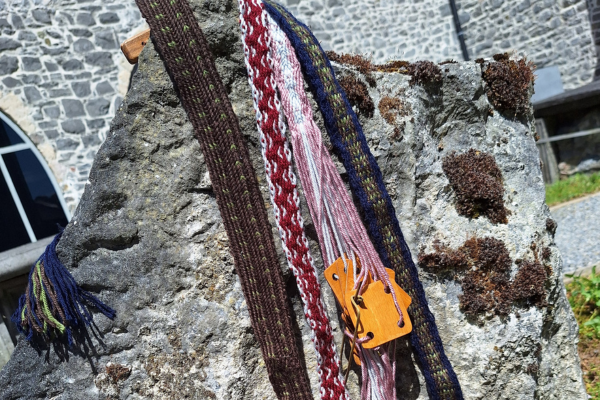
Tablet weaving, sometimes known as card weaving, dates back to at least the 8th century BCE and has been used around the world to create decorative trims, belts and strong woven bands. From practical clothing fastenings to richly decorative borders, tablet weaving played an important role in historic dress and textile production.

Using a series of small weaving cards and tension rather than a loom, participants will discover how surprisingly simple and satisfying this historic technique can be. The workshop also explores how tablet weaving continues to inspire textile makers today, including the creation of traditional woven pieces such as the Irish crios belt.


Learn with Grace Rinehart Macrae

Historical costumer and embroiderer Grace Rinehart Macrae will guide participants through the history, techniques and practical skills involved in tablet weaving.

Whether you are interested in textiles, costume history or simply looking for something different to do in Kilkenny, this welcoming workshop is suitable for all skill levels and offers an enjoyable evening of creativity and conversation.

Participants will leave with:

◆ Their own weaving project
◆ Handmade weaving cards
◆ Practical weaving skills to continue at home
◆ A deeper understanding of historic textile traditions

Event Details

Date: Friday, 21 August | 6 pm
20 places available | €15 per person | 18+
All materials included

Click Here to Book Your Place

Places are limited and advance booking is recommended.


Six After 6 Summer Cultural Series

The 6 After 6 Summer Cultural Series offers a unique opportunity to enjoy creative workshops and evening cultural experiences in Kilkenny within some of the city’s most historic and inspiring settings.

Featuring 36 free and ticketed events from June to early September, the Six After 6 – Summer Cultural Series brings many of Kilkenny’s leading visitor attractions to life after hours, creating memorable evenings for both locals and visitors throughout the summer.

The six attractions taking part in the series are:

◆ Medieval Mile Museum
◆ Butler House & Garden
 Smithwick’s Experience
◆ Rothe House
◆ St Canice’s Cathedral
◆ Butler Gallery

Whether you are seeking a new hobby, a cultural evening out or simply looking for something different to do in Kilkenny, the Six After 6 programme offers a rich mix of creativity, heritage and discovery across the city.

At the Medieval Mile Museum, our workshops provide an inspiring opportunity to connect with medieval history through making, learning and creativity in the remarkable surroundings of St Mary’s Church.

The Six after 6 – Summer Cultural Series is supported by Kilkenny County Council, Fáilte Ireland – Ireland’s Ancient East and the Kilkenny Night Time Economy Pilot.

6 after 6 cultural series


Discover more about Medieval Kilkenny through our
guided toursimmersive exhibitsand special events.

Click here to book your visit today.

For more info
Visit: www.medievalmilemuseum.ie
Call: 056 781 7022 | Email: info@medievalmilemuseum.ie
 

Categories
Blog What's On

Discover the Story of the Bayeux Tapestry Workshop

Looking for creative workshops in Kilkenny or an evening cultural experience inspired by history and storytelling?

Join us at the Medieval Mile Museum for a fascinating Bayeux Tapestry Embroidery Workshop, part of the Six After 6 Summer Cultural Series, where medieval history and creativity come together in the remarkable surroundings of St Mary’s Church.

Led by Grace Rinehart Macrae and Lyn Keane, this hands-on embroidery workshop offers participants the opportunity to explore one of history’s most famous textiles while creating their own tapestry-inspired scene.

tapestry

The Story Behind the Bayeux Tapestry

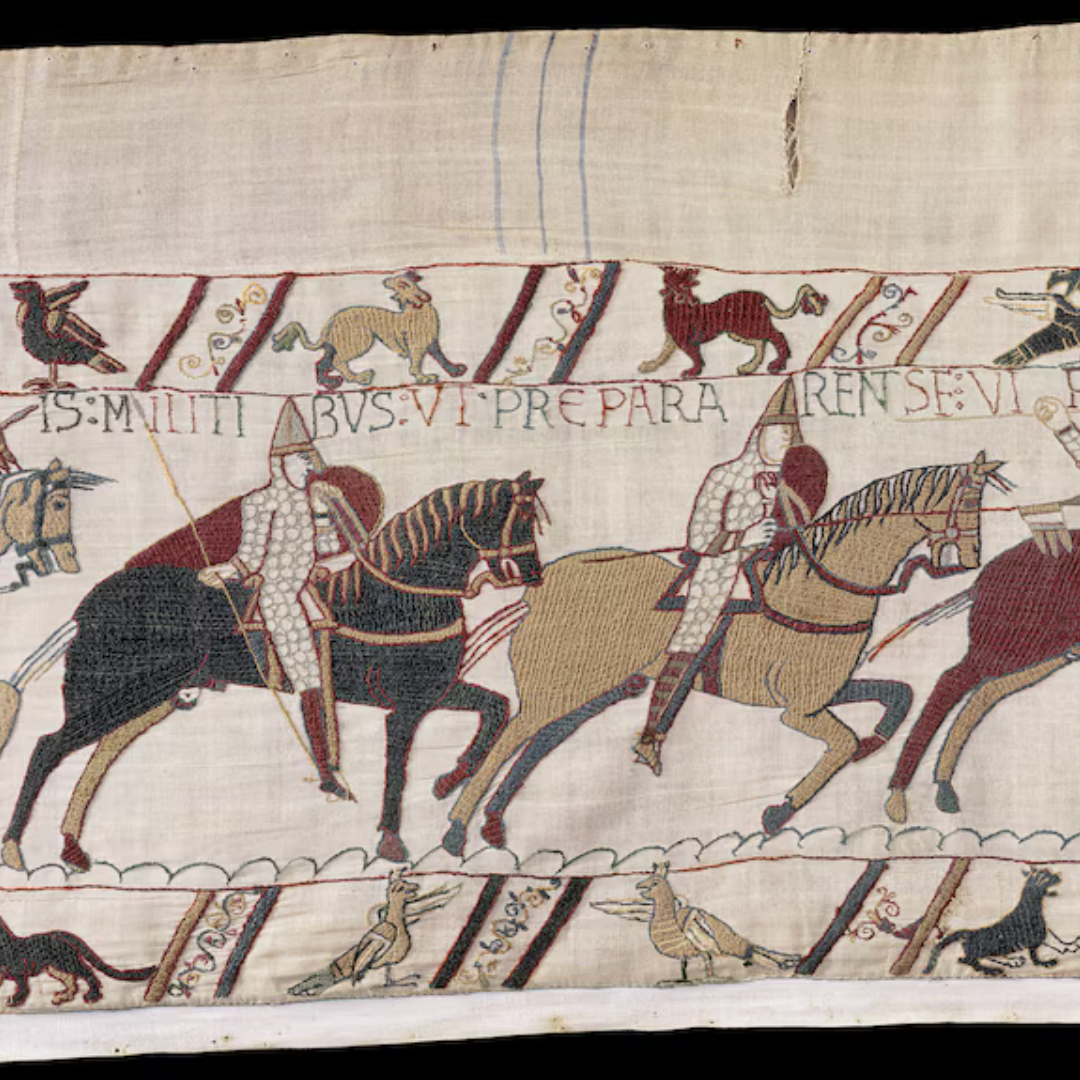
The Bayeux Tapestry is one of the world’s most celebrated medieval artworks, telling the dramatic story of the Norman conquest of England through embroidered scenes filled with battle, symbolism and storytelling.

Stretching almost 70 metres in length, the tapestry captures the events surrounding William the Conqueror and remains an extraordinary example of medieval craftsmanship and historical storytelling.

This workshop also connects with the upcoming Year of the Norman 2027 and the 1000th anniversary of William the Conqueror’s birth in 1027, offering participants a timely opportunity to engage with Norman history and medieval art through making and creativity.


Learn Medieval Embroidery with Grace Rinehart Macrae and Lyn Keane

Historical costumers and embroiderers Grace Rinehart Macrae and Lyn Keane will guide participants through the stitches, techniques and stories behind the Bayeux Tapestry.

As you learn, you will create your own embroidered scene inspired by the famous tapestry, taking home both a new skill and a project to continue beyond the workshop.

Whether you are new to embroidery or already enjoy needlework and historic crafts, this workshop welcomes all skill levels and offers a relaxed and enjoyable evening of learning and creativity.

Participants will leave with:

◆ Their own tapestry-inspired embroidery project
◆ New embroidery techniques and skills
◆ A deeper appreciation of Norman history and medieval storytelling


Event Details

Date: Friday 24 July | 6 pm
20 places available | €15 per person | 18+
All materials included

Book Your Place Here

Places are limited and early booking is recommended.

Book here and stitch your own piece of medieval storytelling in the heart of Medieval Kilkenny.

Six After 6 Summer Cultural Series

The 6 After 6 Summer Cultural Series offers a unique opportunity to enjoy creative workshops and evening cultural experiences in Kilkenny within some of the city’s most historic and inspiring settings.

Featuring 36 free and ticketed events from June to early September, the Six After 6 – Summer Cultural Series brings many of Kilkenny’s leading visitor attractions to life after hours, creating memorable evenings for both locals and visitors throughout the summer.

The six attractions taking part in the series are:

◆ Medieval Mile Museum
◆ Butler House & Garden
 Smithwick’s Experience
◆ Rothe House
◆ St Canice’s Cathedral
◆ Butler Gallery

Whether you are seeking a new hobby, a cultural evening out or simply looking for something different to do in Kilkenny, the Six After 6 programme offers a rich mix of creativity, heritage and discovery across the city.

At the Medieval Mile Museum, our workshops provide an inspiring opportunity to connect with medieval history through making, learning and creativity in the remarkable surroundings of St Mary’s Church.

The Six after 6 – Summer Cultural Series is supported by Kilkenny County Council, Fáilte Ireland – Ireland’s Ancient East and the Kilkenny Night Time Economy Pilot.

6 after 6 cultural series

Categories
Blog What's On

Tudor Blackwork Embroidery Workshop

Looking for craft workshops in Kilkenny or a creative evening with a historic twist?

The Medieval Mile Museum invites you to slow down, stitch and discover the elegant world of Tudor Blackwork Embroidery as part of the Six After 6 Summer Cultural Series.

Led by Grace Rinehart Macrae, historical costumer and Assistant Manager at the Medieval Mile Museum, this hands-on workshop explores one of the most distinctive embroidery styles of the Tudor period within the remarkable surroundings of St Mary’s Church.

Tudor Blackwork Embroidery

What is Tudor Blackwork Embroidery?

Blackwork embroidery became highly fashionable among the Tudor upper classes and was commonly used to decorate collars, cuffs and fine garments visible beneath layers of elaborate clothing.

Its beautiful combination of geometric patterns and floral motifs made it instantly recognisable and helped define the elegance of Tudor dress, as seen in many portraits from the period.

More than decoration alone, embroidery provided a creative outlet and practical skill that was passed from generation to generation. This workshop offers participants the opportunity to connect with that tradition while learning a relaxing and rewarding craft.


Learn Historic Stitching with Grace Rinehart Macrae

Join Grace Rinehart Macrae for an evening of stitching, creativity and conversation exploring historical clothing and decorative techniques.

Participants will learn the foundations of blackwork embroidery and create their own stitched sampler to display or continue developing at home.

Whether you already enjoy sewing and textiles or are trying embroidery for the first time, this workshop welcomes all skill levels and offers a warm and engaging learning experience.

Participants will leave with:

◆ Their own embroidered sampler
◆ Practical embroidery skills
◆ A deeper appreciation of Tudor craft and clothing traditions


Event Details

Date: Friday 10 July | 6 pm
20 places available | €15 per person | 18+
All materials included

Sold Out

Places are limited and advance booking is recommended.

Book today and discover the beauty of Tudor embroidery in the heart of Medieval Kilkenny.


Six After 6 Summer Cultural Series

The 6 After 6 Summer Cultural Series offers a unique opportunity to enjoy creative workshops and evening cultural experiences in Kilkenny within some of the city’s most historic and inspiring settings.

Featuring 36 free and ticketed events from June to early September, the Six After 6 – Summer Cultural Series brings many of Kilkenny’s leading visitor attractions to life after hours, creating memorable evenings for both locals and visitors throughout the summer.

The six attractions taking part in the series are:

◆ Medieval Mile Museum
◆ Butler House & Garden
 Smithwick’s Experience
◆ Rothe House
◆ St Canice’s Cathedral
◆ Butler Gallery

Whether you are seeking a new hobby, a cultural evening out or simply looking for something different to do in Kilkenny, the Six After 6 programme offers a rich mix of creativity, heritage and discovery across the city.

At the Medieval Mile Museum, our workshops provide an inspiring opportunity to connect with medieval history through making, learning and creativity in the remarkable surroundings of St Mary’s Church.

The Six after 6 – Summer Cultural Series is supported by Kilkenny County Council, Fáilte Ireland – Ireland’s Ancient East and the Kilkenny Night Time Economy Pilot.

6 after 6 cultural series